Case study 07
PI Control of Dam Water Level
An academic control-engineering project in TTK4105 at NTNU, developing a closed-loop PI controller for water-level regulation in a simplified dam model under varying inflow and measurement noise.
- Discipline
- CONTROL ENGINEERING / SYSTEM MODELLING / SIMULINK
- Course
- TTK4105 — Control Engineering
- Project type
- academic
- Period
- Spring 2025
- Evidence
- Control code + Technical report
- Team
- 4 mechanical engineering students
- My role
- System modelling, PI control and simulation

01 / Engineering challenge
The system behind the project
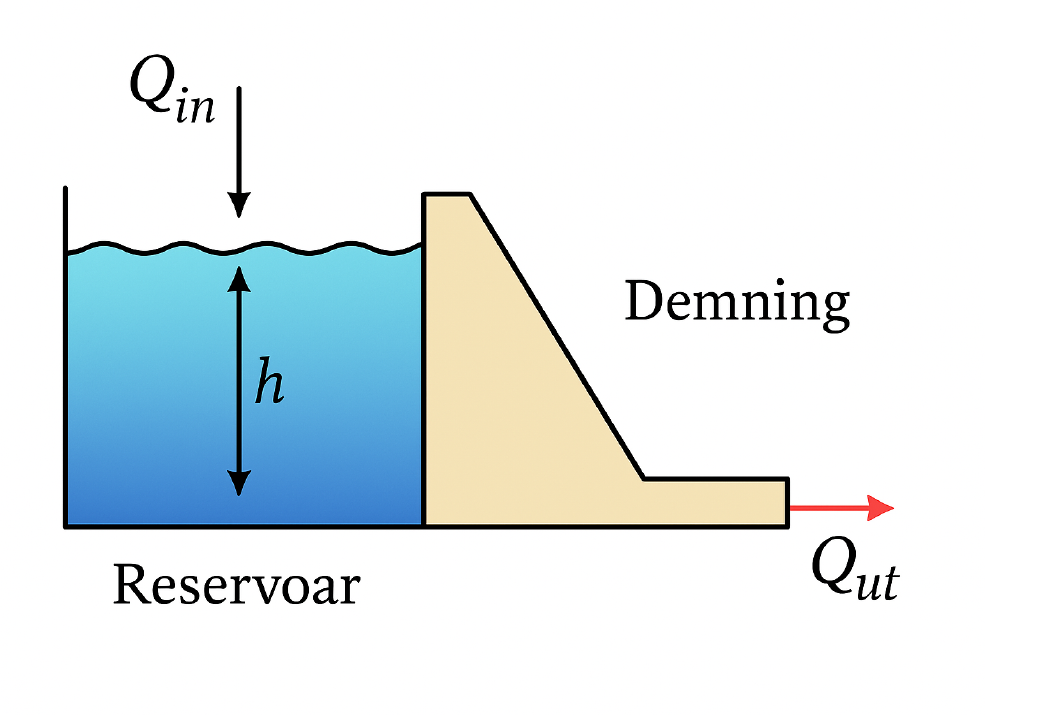
Reliable water-level control is a representative process-control problem involving mass balance, feedback, actuator behaviour, external disturbances and uncertain measurements. The work connects core control theory to infrastructure and industrial fluid systems.
02 / My responsibility
What I personally worked on
Worked in a four-person mechanical-engineering team to formulate the dynamic model, develop and tune the PI controller, build the Simulink implementation and evaluate the response under disturbances and sensor noise.
Engineering focus
- — First-order dynamic modelling
- — PI control and pole placement
- — Disturbance and noise response
- — Performance evaluation using IAE
Tools and methods
03 / Design and implementation
From concept to working system
- 01
Derive a first-order dynamic model from the reservoir mass balance and linearise it around an operating point.
- 02
Select a PI structure to eliminate steady-state error without unnecessarily amplifying measurement noise.
- 03
Tune the proportional and integral gains using pole placement and implement the closed loop in Simulink.
- 04
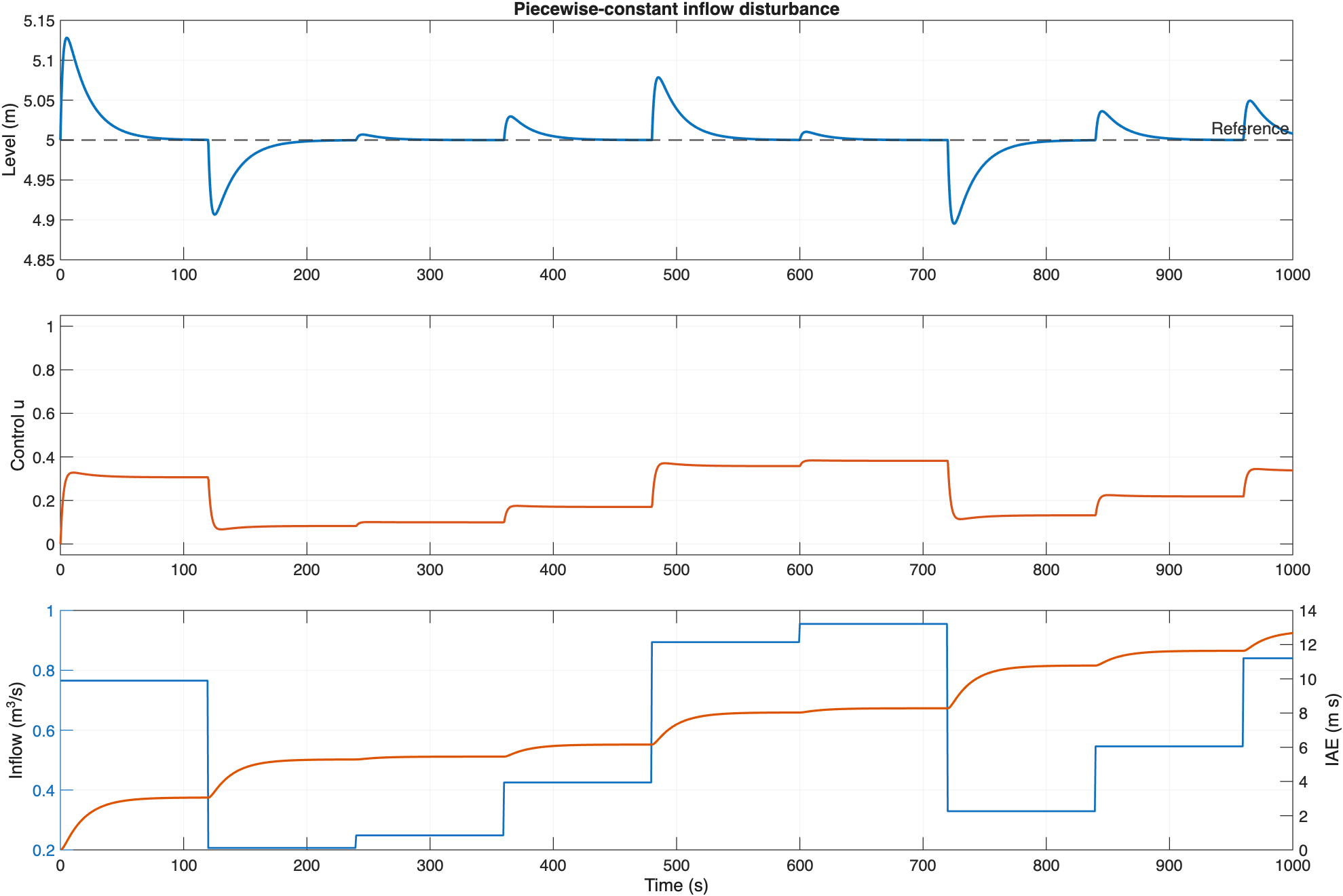
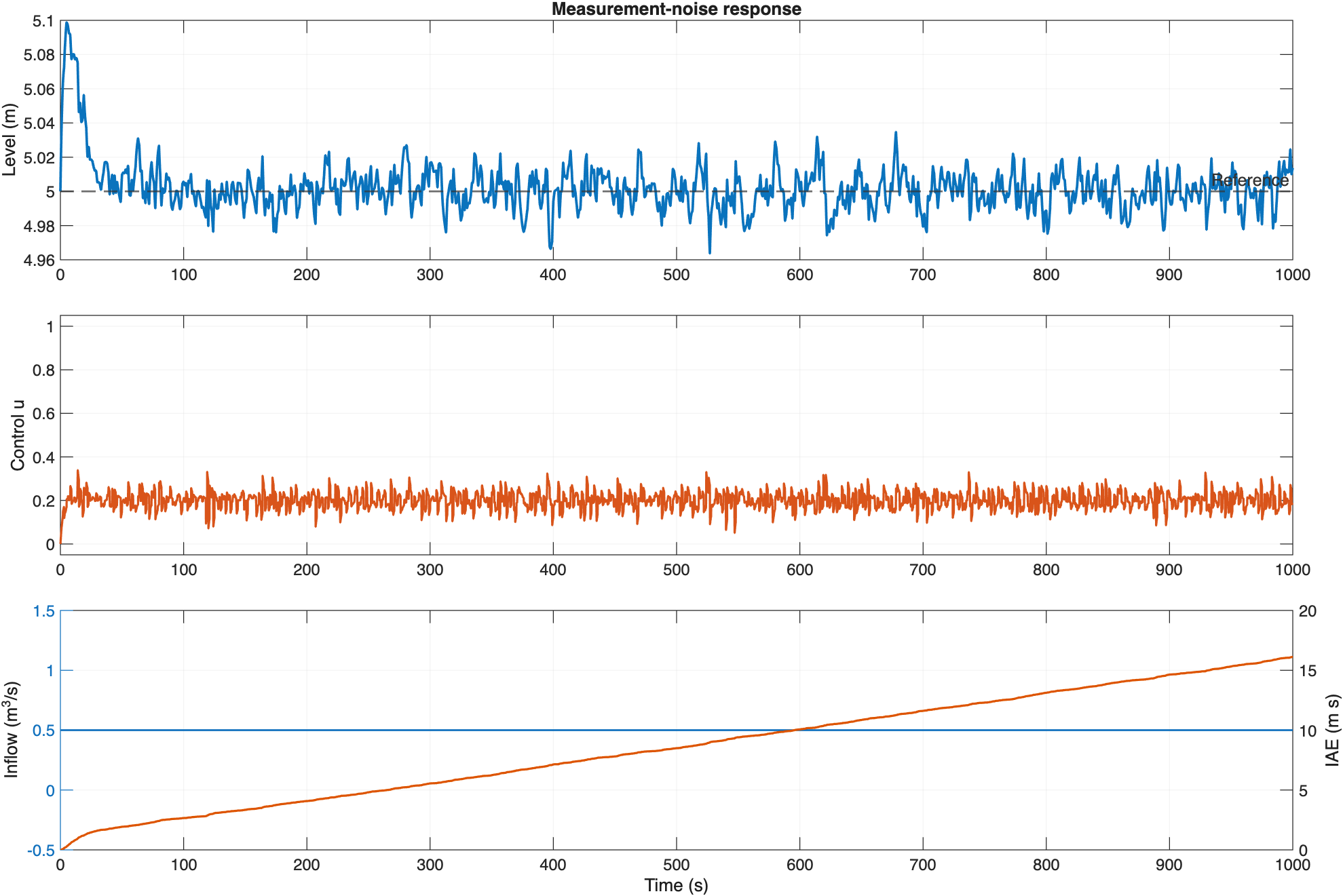
Test the system with varying inflow, band-limited measurement noise and the Integral of Absolute Error performance metric.
04 / Testing and outcome
What the work demonstrated
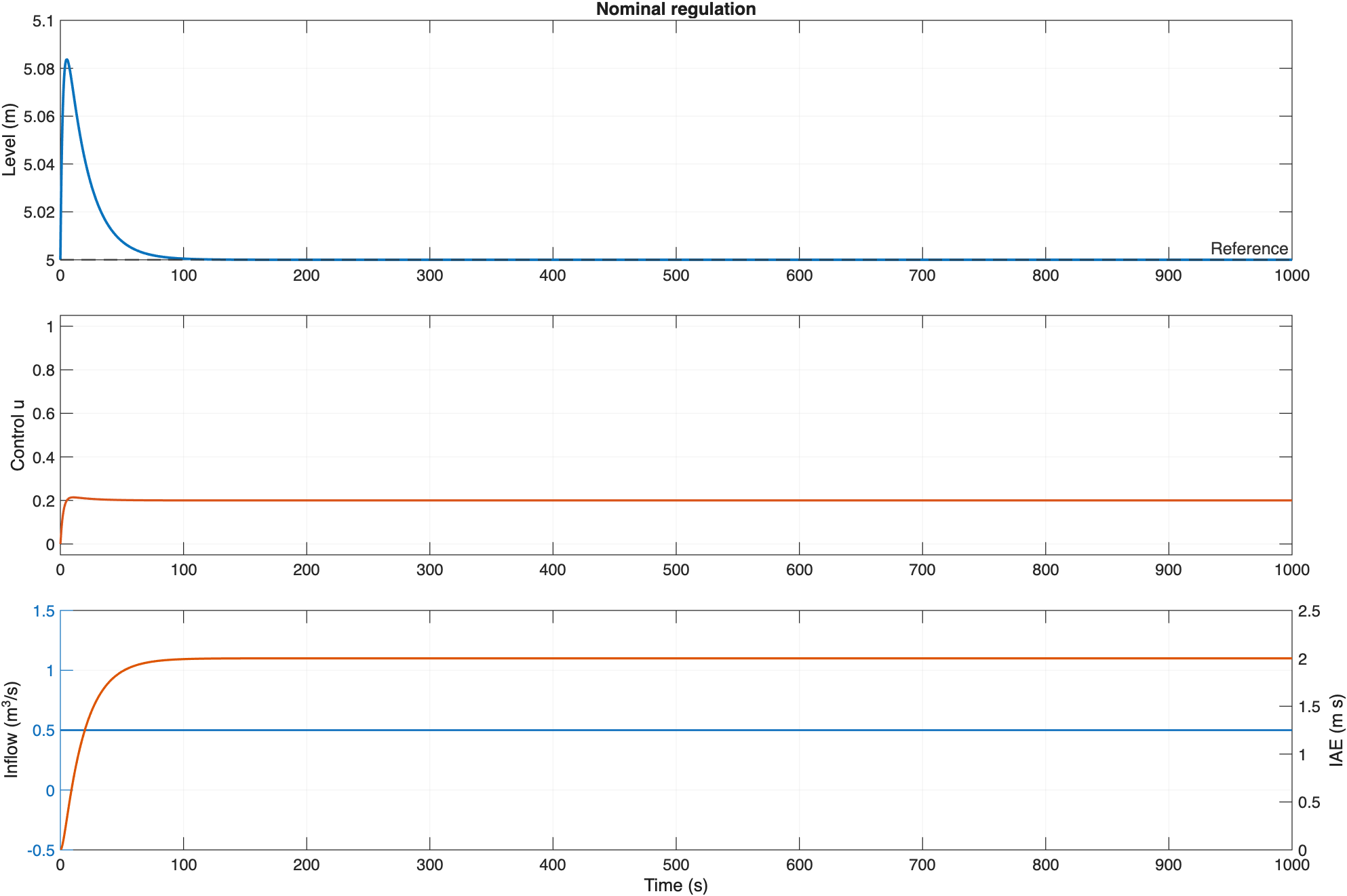
The portfolio reconstruction reproduces the documented model and controller in executable MATLAB and Simulink files. Across seeded review scenarios, the level remained between 4.895 m and 5.128 m; peak absolute error was 0.128 m for the inflow-disturbance case. These figures verify the reconstructed conceptual model, not the behaviour or safety of a physical dam.
05 / Next iteration